Mousse vs Tube vs Tubliss: Which Setup Is Right?
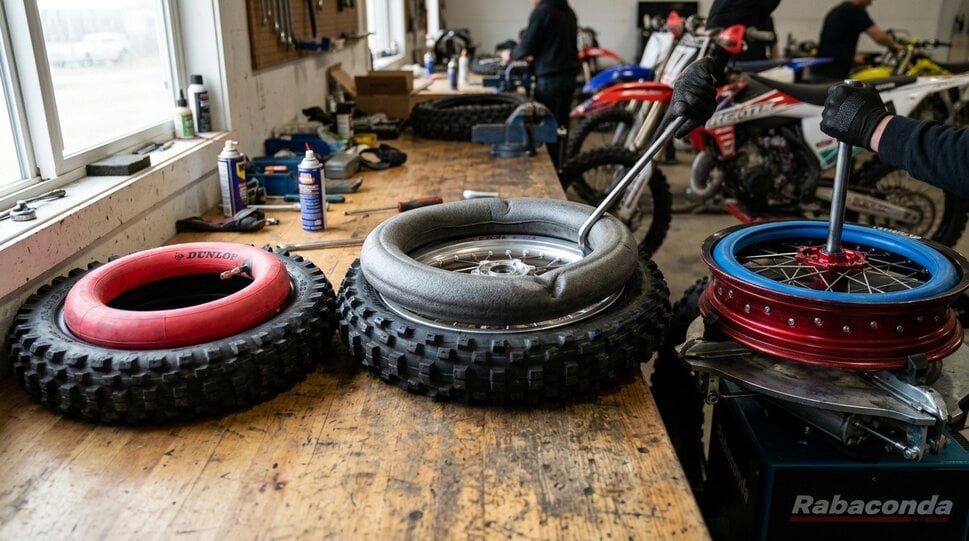
If you're choosing between a standard tube, a mousse insert, or a Tubliss system, it comes down to one question: how much are flats costing you, and what are you willing to trade for never having one again? Here's how the three stack up.
The quick answer
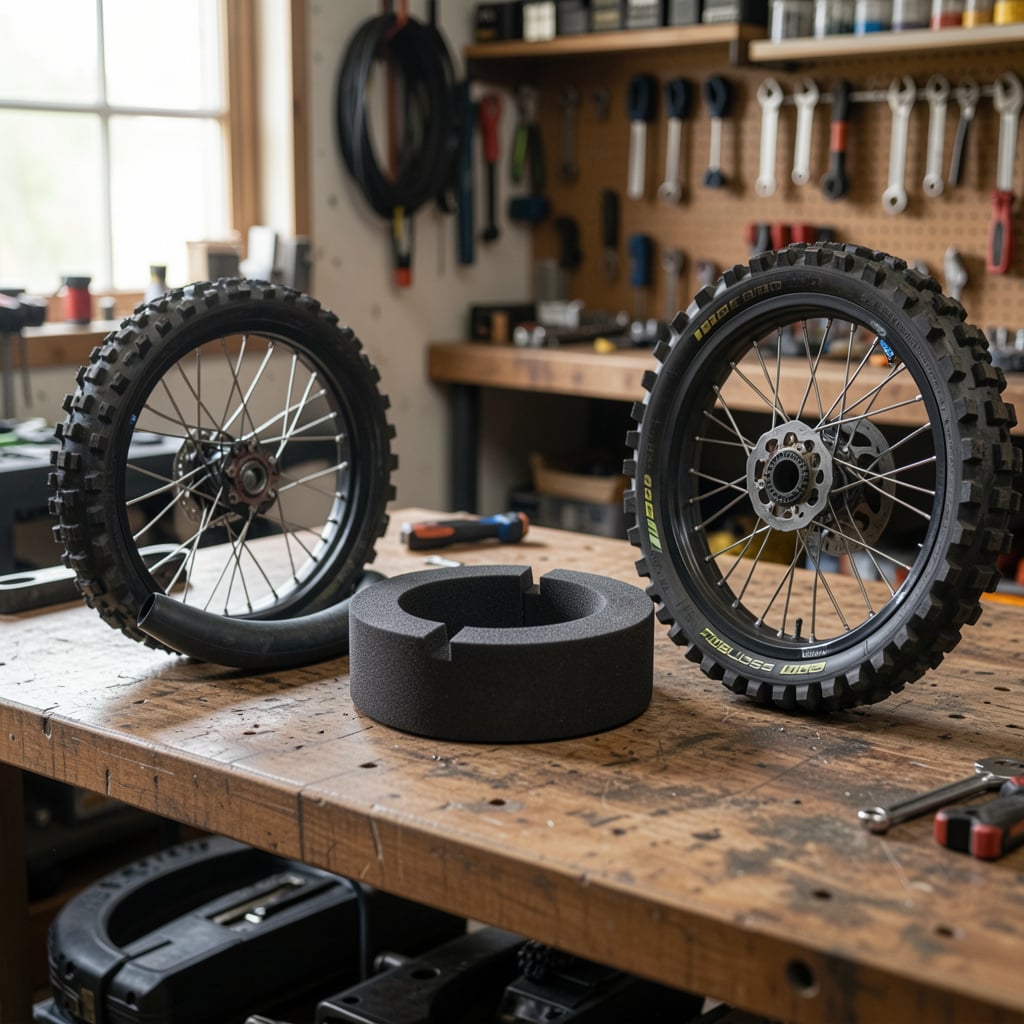
A standard heavy duty tube is the cheapest and lightest option but still gets flats. A mousse insert eliminates flats completely at the cost of weight, price, and a fixed ride feel you can't adjust. Tubliss splits the difference: you get a puncture-resistant rim lock plus adjustable tire pressure, at a higher upfront cost than a tube but with a system that's reusable for years.
Weight
A heavy duty tube runs about 2 to 3 pounds. A mousse insert typically weighs 4.5 to 5 pounds, nearly double, and that extra weight sits right at the wheel, where it has the biggest effect on how the bike feels in the air and through chop. Tubliss falls closer to the tube end of the scale since its bladder is far lighter than a full foam insert, even with the added rim lock hardware.
Cost over time
A tube is the cheapest option to buy, often $20 to $35, but it's a consumable. Every flat means a new tube or a trailside patch job. A mousse runs $130 to $180 and, unlike a tube, doesn't need replacing after a single puncture, but it does wear out over time regardless of flats. Tubliss costs more upfront, generally $150 to $250 for the full kit, but the bladder and rim lock hold up for hundreds of hours of riding, so the cost evens out for anyone racing or riding regularly over multiple seasons.
Ride feel and pressure
This is where the three setups really diverge. A tube lets you run whatever pressure the trail calls for and adjust on the fly. A mousse locks you into one fixed feel, generally equivalent to 10 to 16 psi depending on the brand and compound, with no way to soften or firm it up for changing terrain. Tubliss keeps that adjustability: since the bladder handles the bead lock separately from the tire's air chamber, you can run the outer tire as low as 3 psi for maximum traction on roots and rocks, or bump it up for faster, harder terrain.
Flat protection and trailside repair
A mousse is the only one of the three that makes flats physically impossible since there's no air chamber to lose in the first place. That's why it's still the standard for professional off-road racers and anyone riding somewhere a flat means a long walk out. Tubliss isn't flat-proof in the same way, but a punctured outer tire can often be patched trailside with a standard repair strip and a mini pump, something you generally can't do with a torn mousse. A standard tube is the most vulnerable to flats but also the easiest and cheapest to fix or swap on the spot.
Comparison table
| Tube | Mousse | Tubliss | |
|---|---|---|---|
| Weight | 2-3 lbs | 4.5-5 lbs | Close to tube weight |
| Upfront cost | $20-35 | $130-180 | $150-250 |
| Flat protection | Lowest | Complete | High, trailside repairable |
| Pressure adjustability | Full | None, fixed feel | Full on the outer tire |
| Best for | Casual and budget riders | Racers, remote off-road riding | Riders who want traction control without giving up flat resistance |
Which setup should you run?
If cost and simplicity matter most and you're not riding rock gardens or racing hare scrambles, a heavy duty tube is still the easiest choice. If you race enduro or hard off-road terrain where a single flat ends your day, a mousse is worth the weight and price. If you want the traction benefits of running very low pressure without accepting a fixed ride feel, and you're willing to install and maintain the system correctly, Tubliss is the middle ground built for exactly that.
Frequently asked questions
How long does a mousse last?
Most mousse inserts hold up for 30 to 60 hours of riding, or roughly six months to a year, depending on heat, speed, and correct sizing. Once the foam turns spongy or develops flat spots, it's time to replace it.
How long does Tubliss last?
The bladder and rim lock typically last hundreds of hours when installed correctly, making it far more durable over time than a mousse or standard tube.
Can you run a mousse and Tubliss together?
Yes. Some hard enduro riders combine a worn mousse with a Tubliss setup, sometimes called a moobliss, to get Tubliss's low-pressure traction with a run-flat backup if the tire carcass tears.
Do I need different mousse sizes for the front and rear?
Yes, front and rear wheels use different mousse codes based on rim size and tire profile. If you're setting up a mousse, our Dunlop mousse size chart walks through matching the right code to your tire.
Whichever setup fits how you ride, you'll find the full Dunlop tire lineup in stock, along with standard inner tubes if you're sticking with the tried and true.
Recent articles
View all
Best Alpinestars Gear for Weekend Warriors in 2026
Tech 7 vs Tech 10 vs Tech 3: Which Alpinestars Boot Is Right?