Do You Need to Re-Jet After a VHM Head or Piston?
Key Takeaways
- A VHM insert that keeps compression close to stock often needs little or no jetting change, as long as the bike was jetted right before. Higher-compression inserts are where jetting usually moves.
- When a head change does shift jetting, it tends to show up off the bottom first. In mXrevival's test on a 2017 KTM 250SX, a VHM head fitted alongside a new pipe made the bike bog and surge off the bottom until the low-speed circuit was richened half a turn.
- A same-size replacement piston rarely changes jetting on its own. Changing the piston design, compression or cylinder at the same time is what does.
- Install one change at a time and ride between them. Fitting a head and a pipe on the same weekend hides which one moved your jetting.
You just bolted on a VHM head or rebuilt the top end with a new piston, and now you're wondering whether the carb needs to come apart too. Re-jetting after a head or piston swap isn't automatic. It depends on how much compression changed, what else changed with it, and how well the bike was jetted before. This guide shows you how to tell whether you need to re-jet, and where to start if you do.
Do you need to re-jet after installing a VHM head?
Usually not much, if the bike was jetted well before and your insert keeps compression close to stock. A higher-compression insert changes how the mixture burns and can make the bike run lean or crisp off the bottom. Plan to check the pilot circuit and needle clip after your first real ride, rather than changing jets before you start.
VHM sells inserts in different volumes for each model. On the KTM 125SX '23-'24, for example, MXTire carries 11.00, 11.40 and 11.60 cc inserts. The smaller the number, the higher the compression, and the more likely you'll need a small jetting change. Real-world tests line up with that. In mXrevival's VHM head and pipe test on a 2017 KTM 250SX, the bike bogged and surged off the bottom at first, and the fix was richening the carb's low-speed circuit by half a turn. The tester fitted a new pipe at the same time, so the head wasn't the only change, which is exactly why one change at a time matters.
Do you need to re-jet after a new piston?
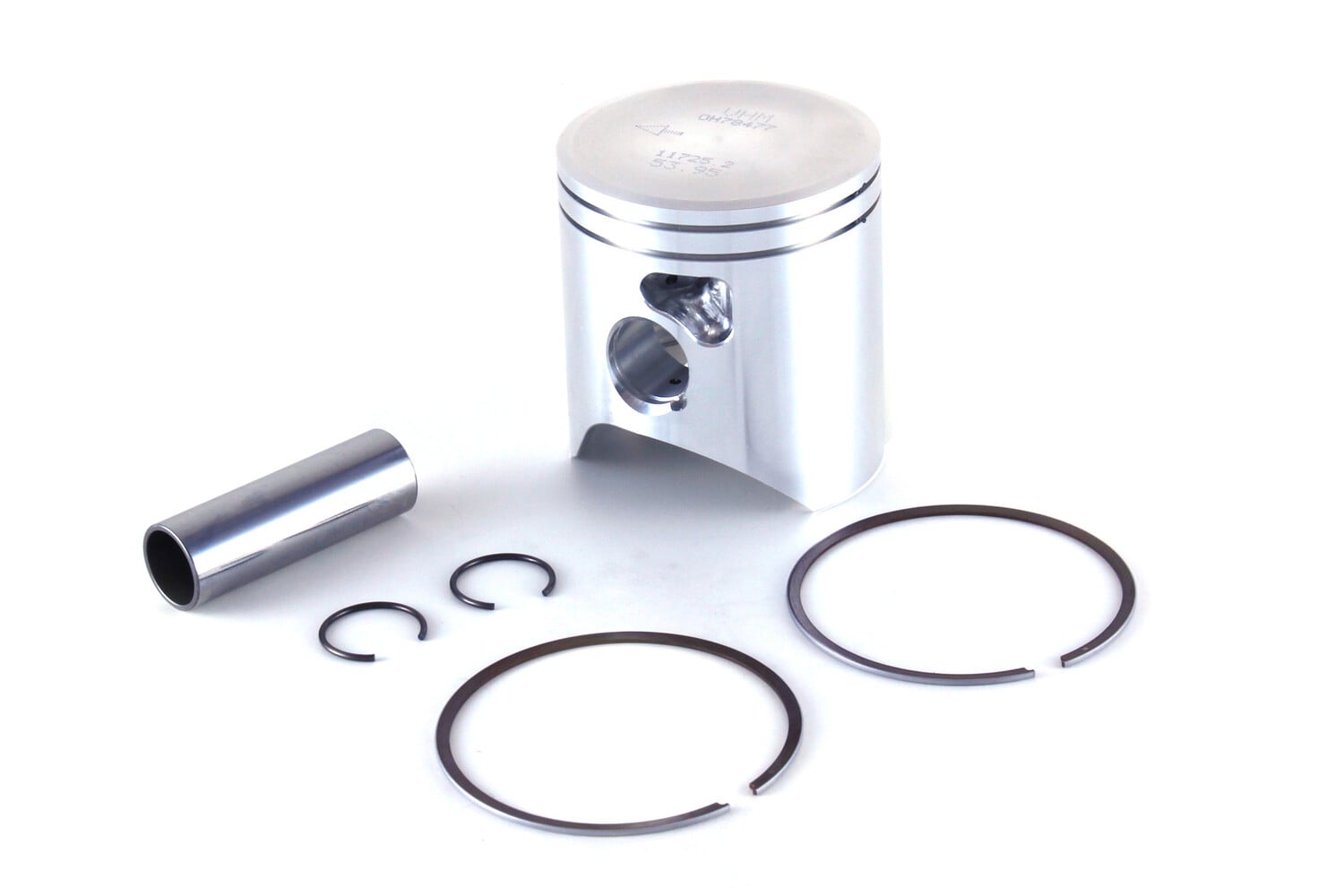
A same-size replacement piston in an unchanged cylinder usually doesn't need new jetting. Jetting changes when the rebuild changes compression or airflow: a different piston crown, a new insert to match it, an overbore or a ported cylinder. VHM's 12° pistons, for example, pair with a dedicated insert, which counts as a compression change.
MXTire lists VHM 12° piston kits for the KTM 125SX ($169.99) and 65SX ($148.95), along with inserts made for the 12° piston on models like the 105SX 2025 ($80.00). If you're doing a full rebuild, grab a gasket kit for the job and browse pistons and top end kits from VHM and other brands. Then break the piston in according to the maker's instructions before you judge the jetting, since a fresh top end doesn't run the same during break-in.
How to tell if a 2-stroke is lean or rich
A lean 2-stroke runs hot and crisp, then pings, surges or hangs at a steady throttle. Treat lean first, because it can damage the piston. A rich 2-stroke blubbers, smokes heavily, loads up and fouls plugs. The best check is reading the spark plug after a clean run at the throttle position where the problem shows up.
| Sign | Running lean | Running rich |
|---|---|---|
| Throttle response | Surging, hanging revs, crisp but inconsistent | Blubbering, sluggish, slow to clean out |
| Sound | Pinging or rattling under load | Muffled, stuttering, four-stroking |
| Spark plug | Very light tan to white | Dark, wet or oily, fouls often |
| Exhaust | Little smoke, runs hot | Heavy smoke, oily residue at the pipe |
| Risk | Detonation and seizure | Fouled plugs and carbon buildup |
Use a fresh spark plug when you test. An old plug carries deposits from before the change and gives you a misleading read.

Which jetting circuit to change first
Match the change to the throttle position where the problem happens. Carbureted 2-strokes are set up in overlapping circuits, and each one controls a range of throttle opening.
- Closed to 1/4 throttle: the pilot jet and the air or fuel screw, depending on your carb. A bog or surge right off idle usually lives here.
- 1/4 to 3/4 throttle: the needle clip position. Moving the clip down one notch richens this range, and moving it up leans it out.
- 3/4 to full throttle: the main jet. Change it one size at a time.
- Test the same way every time: same section of track, same gear, similar weather. Change one thing, ride, read the plug, then decide the next step.
If your 2-stroke is fuel injected, there are no jets to change. Fueling changes come from the engine mapping instead.
Do you need to re-jet with a new exhaust?
Often, yes. A new pipe or silencer, a change in premix ratio, and changes in altitude and temperature all move jetting, and on many bikes they move it more than a head does. That's why it pays to separate your changes, so you know which part is responsible for what you feel.
If you're planning a head and a pipe, install the head first, ride it, sort the jetting, then add the pipe from the 2-stroke pipes category. Keep your premix ratio the same through the whole process too. Switching your 2-stroke oil ratio mid-test changes how much fuel actually reaches the engine and muddies the result.
Frequently asked questions
Should I jet richer to be safe after a head swap?
Slightly rich is safer than lean, but going too rich fouls plugs and hides how the head actually runs. Make one small change, ride, and read the plug before going further.
Is it normal for a new head to ping?
No. Pinging is detonation, and it usually means the engine is running lean or the insert's compression is too high for your fuel. Stop riding hard and fix it before it damages the piston.
Does altitude affect jetting after a head swap?
Yes. Thinner air at higher elevation makes the same jetting run richer, so a setup that works at your home track can feel different at a track in the mountains.
Do fuel-injected 2-strokes need re-jetting after a head change?
There are no jets on a fuel-injected 2-stroke. Any fueling change after a head or piston swap comes from the engine mapping.
Most VHM head and piston swaps need a small check, not a full re-jet. Ride first, read the plug, and change one circuit at a time. If you're still deciding, our guide on whether a VHM head is worth it and our VHM vs stock breakdown cover the rest, and every head, insert and piston kit is in the VHM Racing Products collection.
Recent articles
View all
VHM vs Stock: What Actually Changes on Your 2- Stroke
VHM Cylinder Head: Is It Worth It? A Rider's Guide